7 Things Quietly Killing the Cosy in Your Living Room
None of them are dramatic. All of them are draining the warmth out of your evenings — and every one is fixable this weekend.
 By James Whitcombe · Updated 1 June 2026 · 7 min read
Most rooms aren't missing money — they're missing a few small, easily fixed things.
There is a particular kind of disappointment in a living room that should feel lovely and somehow doesn't. The sofa is nice. The walls are a decent colour. You've tidied. And yet at the end of the day you sit down and the room keeps you at arm's length, like a hotel lobby that's trying its best. Cosiness isn't a thing you buy in one go. It's a thing you accidentally undo, one small decision at a time.
The good news: the things that drain warmth from a room are usually cheap to reverse, and you almost certainly already own most of what you need. Here are the seven I see most often, and what to do about each.
1. The single overhead light
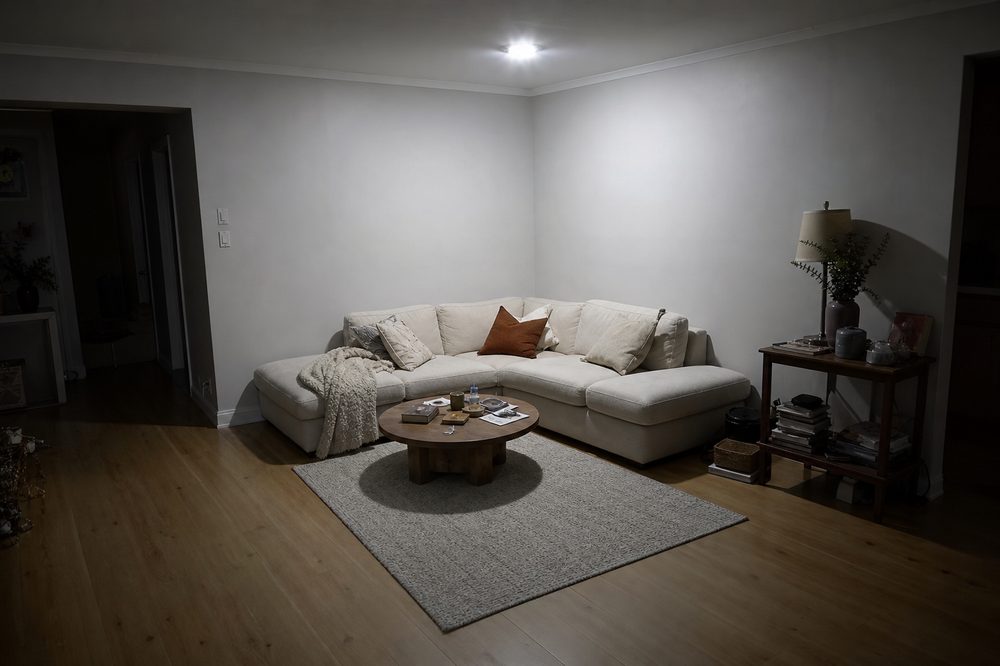
If only one thing on this list changes, make it this one. A lone ceiling light pours flat, even brightness down from above, and our brains read that as daytime, as "things to do", as a corridor you pass through. It's the lighting of a waiting room, and no amount of nice furniture survives it.
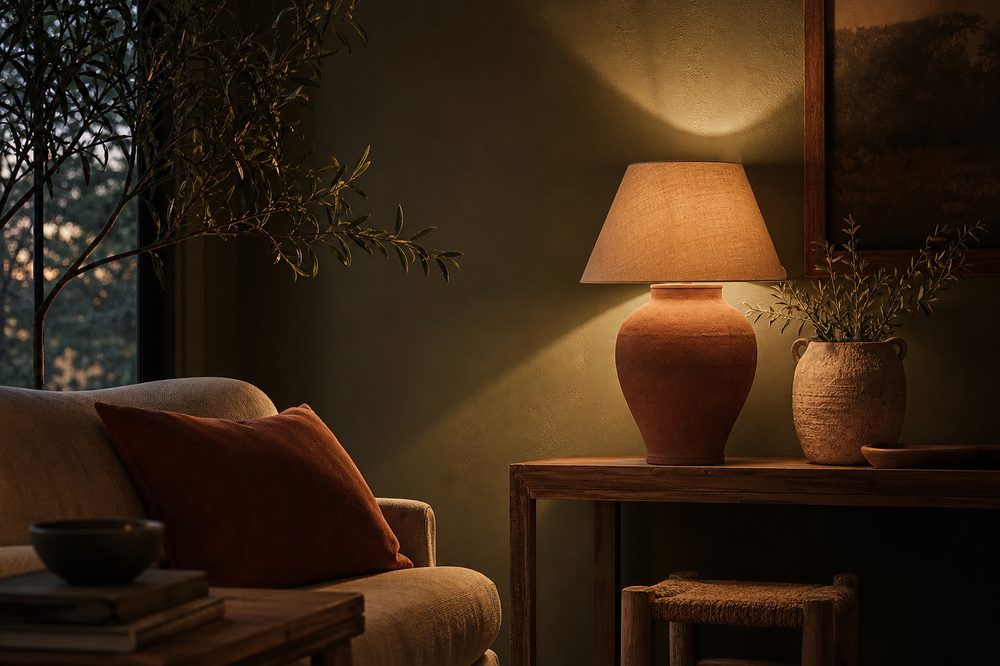
Cosiness lives lower down, in pools rather than floods. The fix costs almost nothing: turn the big light off and bring in two or three smaller sources at table and floor height. A second-hand lamp and a warm bulb will do more for the room than a new sofa. Light it from the corners and the edges, not the centre of the ceiling.
Try this tonight
Switch off the overhead and turn on every lamp you own. If the room instantly feels better, you've found your culprit — and if you only have the one ceiling light, that's the first thing to change.
2. A rug that's too small
The undersized rug is one of the most common and least noticed mistakes in a living room. A little mat floating in the middle of the floor, marooned a metre from any furniture, makes the whole space feel unsettled — the eye can't work out what belongs together. It reads as a postage stamp on a large envelope.
A rug's job is to gather the seating into one zone, like an island the room sits on. As a rule, the front legs of your sofa and chairs should at least touch it; ideally the rug runs the full width of the seating group. If a bigger rug isn't in the budget this month, pull the one you have right up under the sofa rather than stranding it in open floor — it's free and it helps.
3. Cold-white bulbs
You can do everything else right and still kill the mood with the wrong bulbs. That faintly blue, clinical light is high colour temperature — 4000K and up — and it's brilliant for a bathroom or a desk and quietly hostile in a living room at night. It makes skin look grey and surfaces look hard.
Look on the box for the Kelvin figure and aim for around 2700K, sometimes labelled "warm white" or "soft white". The shift to a gentle amber glow is dramatic for the price of a few bulbs. While you're at it, a dimmer switch or simply a couple of lower-wattage lamps lets you drop the light as the evening goes on.
4. Furniture shoved against the walls
We push everything to the edges hoping the room will feel bigger. Usually it just feels emptier, with a lake of unused carpet in the middle and chairs so far apart you'd have to raise your voice to chat. Distance reads as formality, and formality is the enemy of cosy.
Pull the seating in. Float the sofa a hand's width off the wall, angle a chair toward it, close the gap until the group feels like it's actually in conversation. Even a few centimetres makes a difference. You're not filling the room; you're giving people a reason to gather in one warm corner of it. This costs nothing but ten minutes and a bit of shoving.
5. Bare windows
A naked window is a black mirror after dark — a hard, cold rectangle that bounces the room back at you and lets all that lovely lamplight leak straight out into the night. Even in a flat where you don't strictly need privacy, bare glass keeps a room from ever feeling enclosed and snug.
Soft framing changes everything. Curtains that actually reach the floor, hung a little wider and higher than the frame, soften the edges and trap warmth and sound. If you rent and can't drill, a tension rod or a removable curtain wire carries lightweight linen panels with no damage. Closing them at dusk is the single gesture that says the evening has begun.
The cheap-fix checklist
Warm bulbs (2700K). Lamps in the corners. Rug pulled under the sofa. Seating nudged closer. Curtains drawn at dusk. One throw, one cushion you'll actually lean on. None of it expensive — all of it cumulative.
6. No soft texture
Run your eyes around the room and count the hard things against the soft ones. Wood, glass, painted plaster and a slick sofa all reflect sound and light back at you, and a space made only of hard surfaces feels sharp in a way you sense before you can name it. It echoes. It doesn't hold you.
Soft texture is what does the holding. A chunky throw over the arm of the sofa, a couple of cushions in different weaves, a knitted blanket folded at the end of the chair — these absorb sound and catch the light gently instead of flinging it back. Layer textures rather than matching them: linen against wool against a bit of velvet. Charity shops are full of cheap, characterful textiles if you'd rather not buy new.
7. Nowhere for the eye to rest
The last one is the subtlest. A cosy room gives your gaze somewhere gentle to land — a low pool of lamplight, a small cluster of objects on a tray, a candle, a stack of books, something green. Strip every surface completely bare in the name of tidiness and you remove the very things that say a person lives here and is glad to.
This isn't a licence to clutter. The difference between warmth and mess is intention, not quantity. Three things grouped on a tray feel considered; the same three scattered feel like chaos. Keep one or two deliberate, low resting points for the eye — and let the lamp glow over them.
The room you already have
Notice how little of this involves spending. A warm bulb, a rug nudged into place, the big light off, the curtains drawn, a throw over the arm, the chairs pulled together — that's most of the way to a room that holds you rather than hosts you. Cosiness was never about the budget; it was about a handful of small, kind decisions, repeated.
So pick one this evening. Turn off the overhead, switch on a lamp, and sit down. You'll feel the room soften before you can fully say why — and the rest will follow on whatever weekend suits you.
James Whitcombe
James trained in lighting design before he ever wrote a word, and now covers light, colour and mood for dreamirc. He can't walk into a room without quietly assessing its lamps. Meet the team →